
Operational Systems Built Around How Your Business Actually Works
We help growing businesses structure sales, production, inventory, reporting, and operational workflows into connected systems designed for visibility, coordination, and operational growth.
Operational Capabilities
Six connected operational areas designed for manufacturing MSMEs

Sales & Customer Operations
Lead tracking, quotation workflows, follow-up visibility, and inquiry coordination.
Production & Shop-Floor Traceability
Production tracking, workflow visibility, process efficiency, and operational coordination.
Inventory, Orders & Fulfillment
Inventory visibility, order coordination, dispatch tracking, and material flow management.
Finance & Accounting Operations
Approval workflows, billing coordination, operational finance visibility, and reporting.
Reporting & Business Visibility
Centralized dashboards, operational reporting, KPI visibility, and management insights.
Automation & System Integration
Workflow automation, process integration, and connected operational systems.
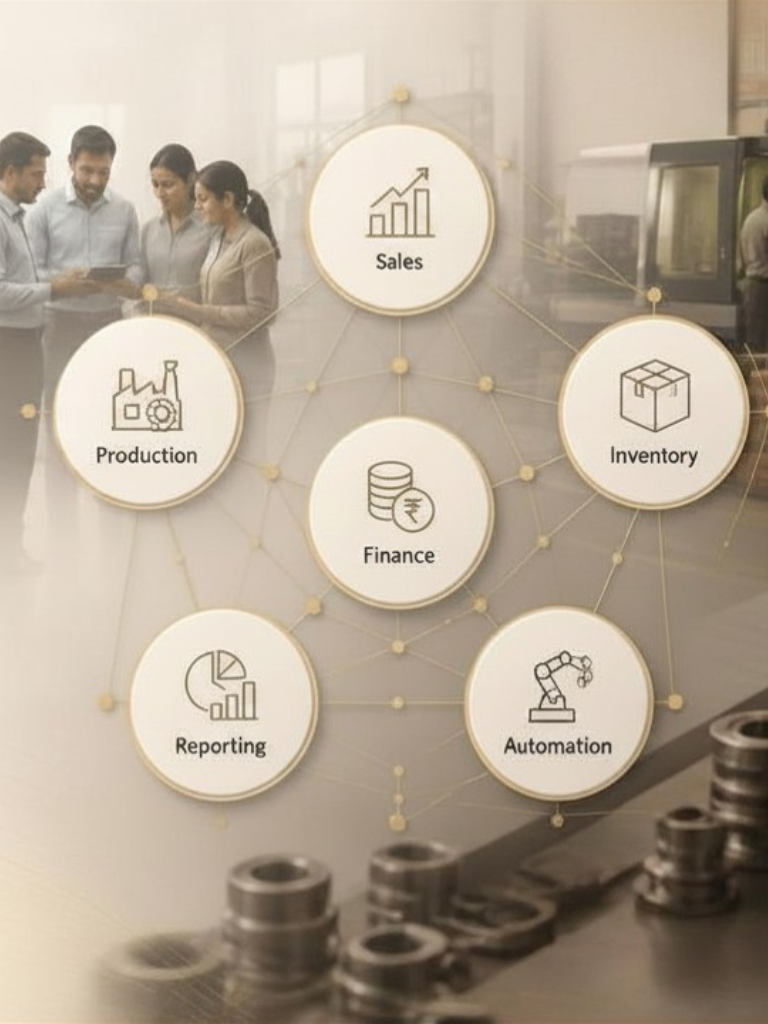
One Connected Operational System
All operational areas work together through one structured system rather than disconnected tools and spreadsheets.
Sales
Production
Inventory
Finance
Reporting
Unified data flow across all operational areas
How We Work
A structured implementation approach focused on operational clarity, adoption, and long-term usability.
Workflow Audit & Optimization
- Current workflow assessment
- System architecture planning
- Data structure & operational mapping
Role-Based Adoption & Stabilization
- Team onboarding & training
- Operational process alignment
- Ongoing system optimization & support
Ready to Structure Your Operations Better?
Frequently Asked Questions
Do you only implement Zoho solutions?
Zoho is one of the primary platforms we work with, but our focus is operational clarity first — not just software deployment.
We design workflows, reporting structures, process visibility, and operational coordination systems that fit how your business actually runs.
Can this work for partially manual businesses?
Yes. Many growing MSMEs still operate with spreadsheets, WhatsApp coordination, manual approvals, and disconnected tracking.
Our approach is designed to gradually structure operations without disrupting existing workflows overnight.
How long does implementation usually take?
Timelines depend on business size, operational complexity, and the scope of workflows involved.
Smaller operational improvements may take a few weeks, while larger multi-department implementations are typically phased over time for smoother adoption.
Can the system be customized for our workflow?
Yes. Every business operates differently, especially in manufacturing, outsourcing, inventory coordination, and approvals.
We structure the system around your actual operational process instead of forcing teams into rigid templates.
Do we need ERP software before implementation?
Not necessarily. Many businesses approach us before having a fully structured ERP environment.
We first help define workflows, operational gaps, reporting needs, and process coordination before recommending the right system structure.