
Best ERP for Small Manufacturing: What Actually Works?
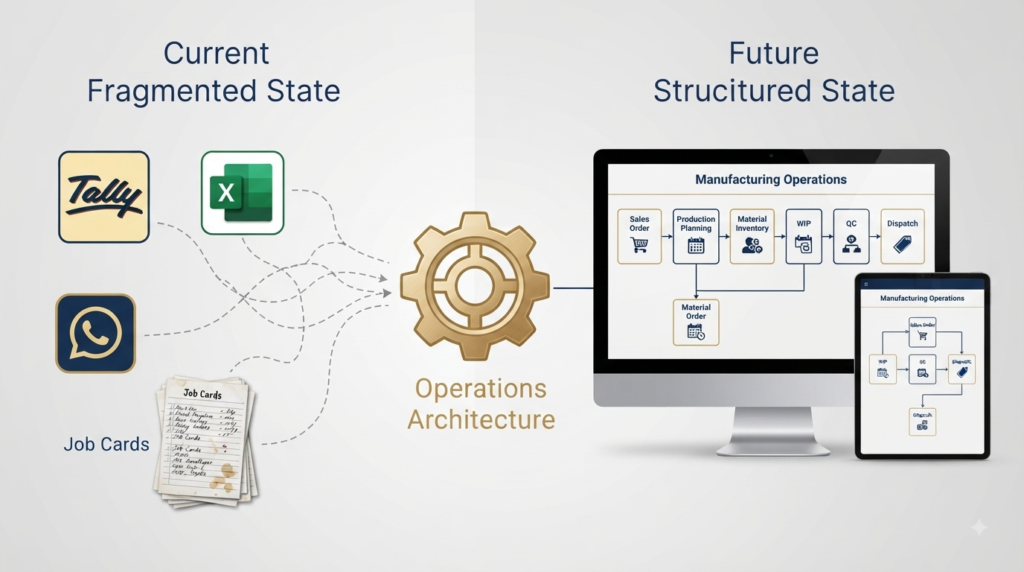
Choosing an ERP for manufacturing is not simply about comparing features. Understand which system approach fits your production, inventory, job work and operational needs.
Manufacturing Dashboards That Actually Matter
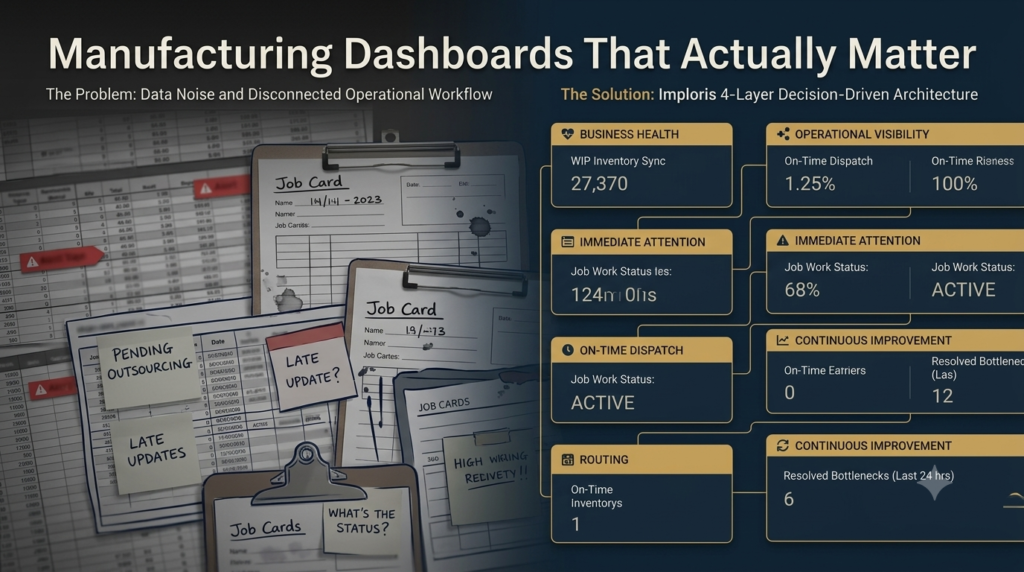
Manufacturing businesses generate a constant stream of information every day. Production updates, inventory movements, purchase requests, quality inspections, dispatch schedules, customer commitments, and financial transactions all contribute to understanding how the business is performing. Yet many owners and managers still begin their day by asking the same questions. Which orders are progressing as planned? What […]
Why Paper-Based Job Cards Break Production Visibility
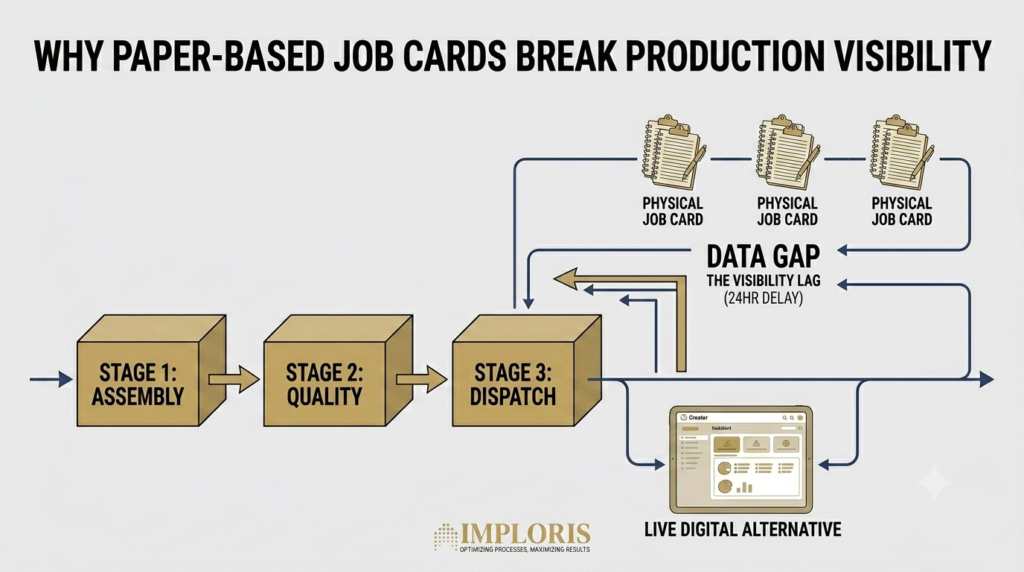
Walk into many growing manufacturing businesses and you’ll notice something reassuring. Production is moving. Machines are running. Operators are working through their assigned jobs. Materials are being issued. Job cards move from one workstation to another. At first glance, everything appears to be under control. Now ask a simple question. “Where exactly is this order […]
Why Manufacturing Teams Lose Visibility as They Grow
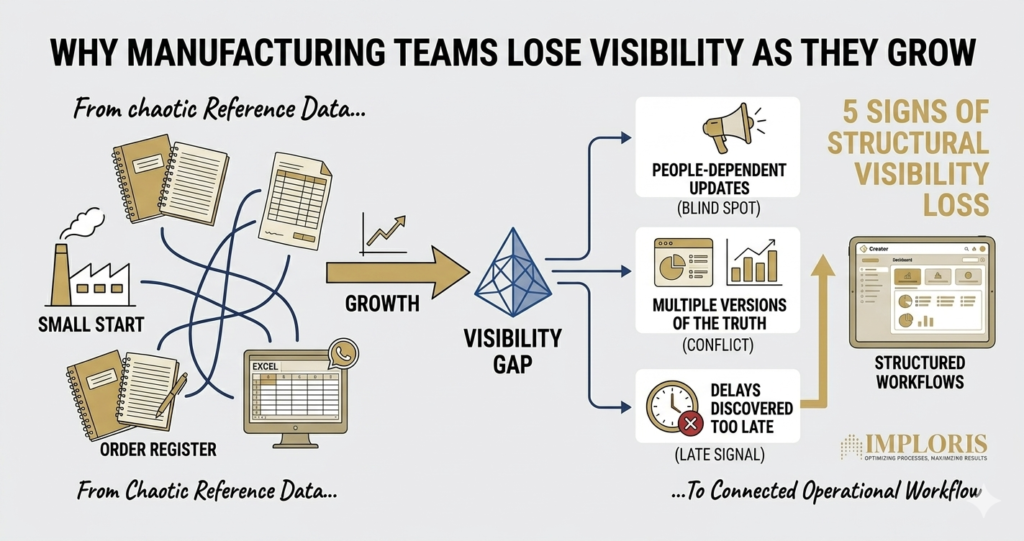
A growing manufacturing business rarely loses visibility overnight. It happens gradually. The first few customers are easy to manage. Orders are tracked in spreadsheets. Procurement discussions happen over WhatsApp. Production updates are shared verbally. Dispatch plans sit on a whiteboard. The owner knows exactly what is happening because most decisions pass through a small group […]
Material Variance in Manufacturing: What MSMEs Often Miss
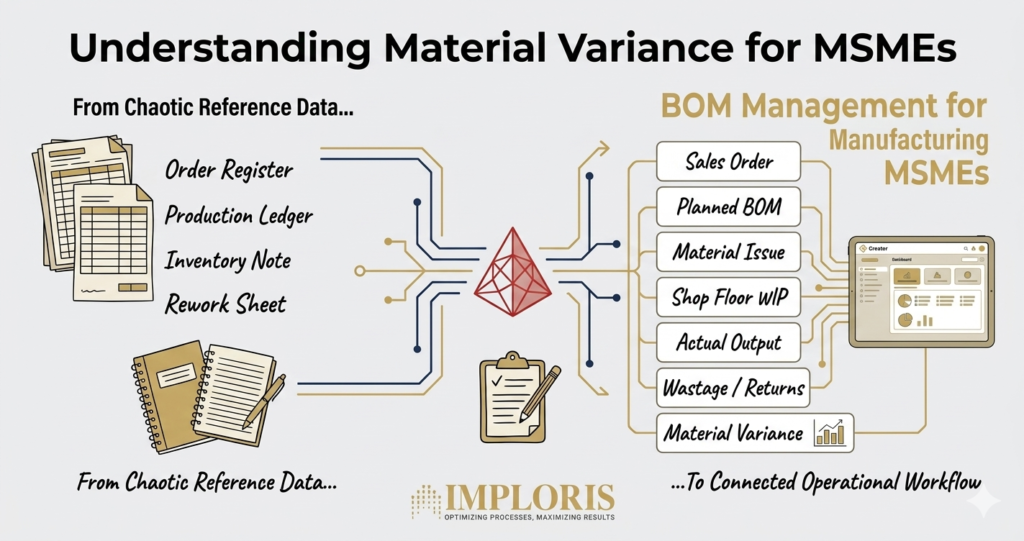
Production gets completed. Materials are issued. The order is delivered. The customer receives the finished product. At that point, many businesses consider the job complete. But one important question often remains unanswered: How much material was actually consumed to produce that order? The answer matters more than it may initially appear. Because material consumption influences […]
Why Excel-Based Manufacturing Systems Stop Scaling

Most manufacturing businesses do not start with sophisticated software. They start with what is available. A spreadsheet for inventory. Another spreadsheet for orders. A workbook for production planning. A worksheet for vendor tracking. A ledger for material movement. A WhatsApp group to coordinate everything in between. And for a while, this works surprisingly well. In […]
Order to Dispatch: How Manufacturing Workflows Should Actually Flow
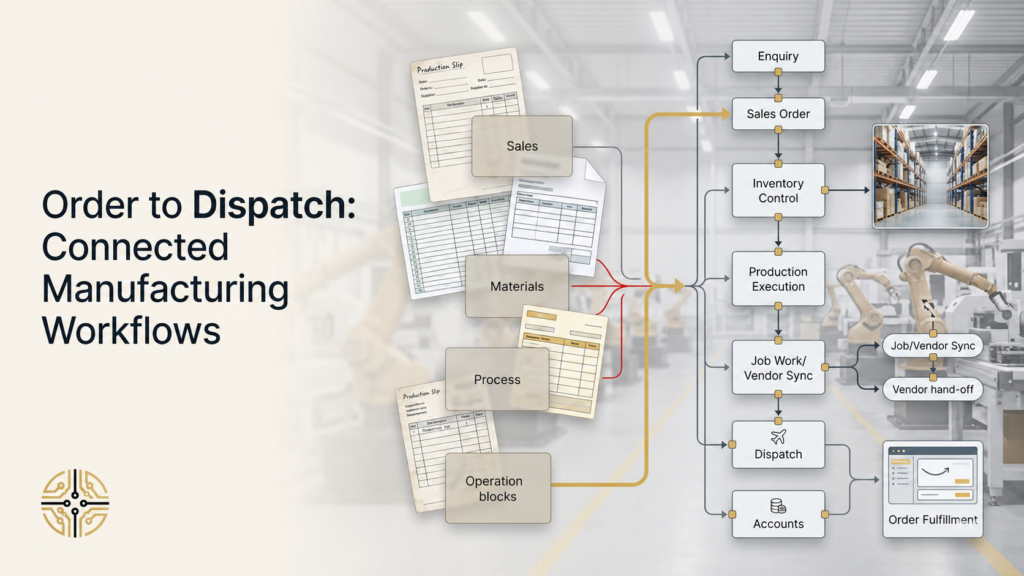
Most manufacturing workflows do not break at one point They break in small invisible gaps between functions. A customer order comes in.Production gets informed.Materials are checked manually.Someone follows up with a vendor.Dispatch is coordinated later. The business is still functioning. But the workflow itself is fragmented. And over time, this creates operational stress that most […]
Designing a Semi-ERP for Manufacturing MSMEs Using Zoho Creator
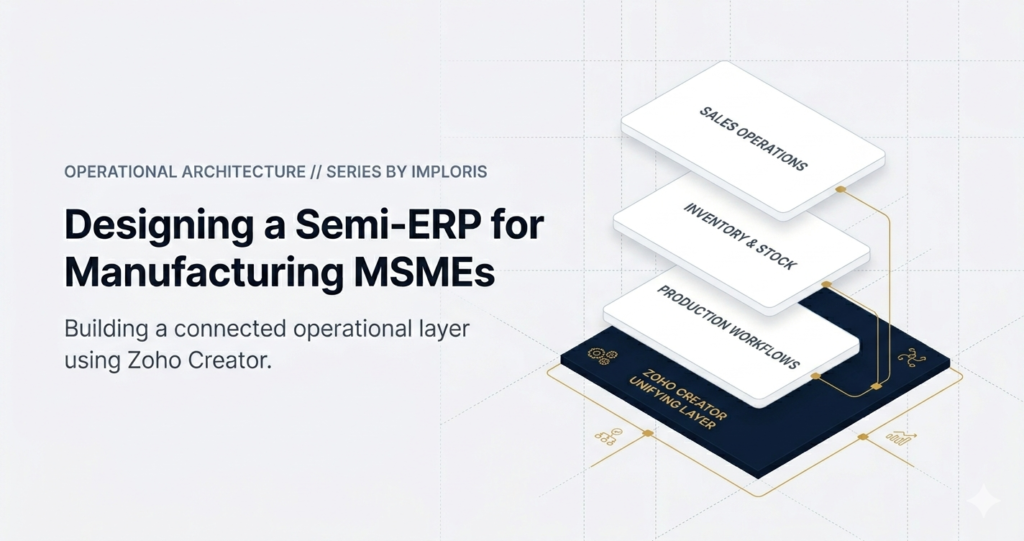
The point where operations stop being manageable There’s a stage in most growing manufacturing MSMEs where things don’t exactly “break,” but they stop feeling clear. Orders are increasing.Materials are moving.Teams are working. But visibility starts disappearing. A founder asks for a delivery update. Someone checks a sheet. Another person calls the floor. Stock is maintained […]
BOM Management for Manufacturing MSMEs: What Actually Breaks
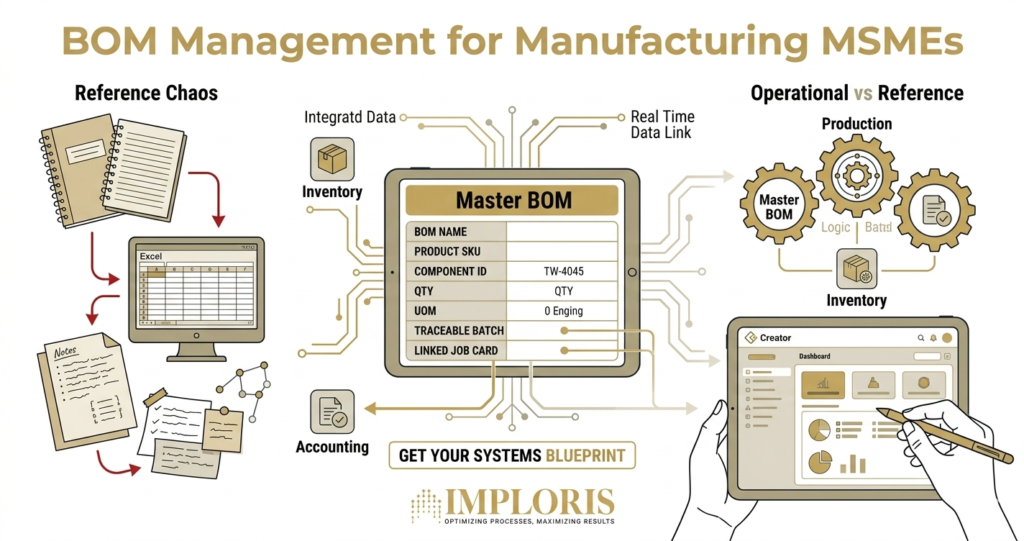
When materials become the real problem There’s a point in manufacturing where materials stop being just “items” and start becoming the core of how the business runs. Not when systems are implemented.Not when processes are documented. But when someone asks: “What exactly went into this product?” And the answer depends on memory. BOM exists, but […]
How Manufacturing MSMEs Can Track Job Work & Outsourcing Properly
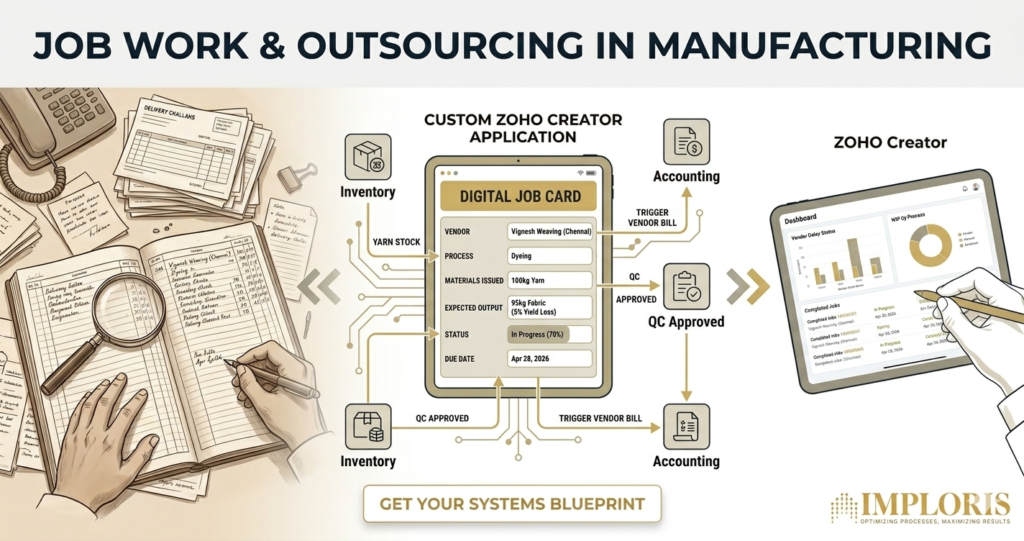
There’s a point in almost every growing manufacturing business where job work starts becoming difficult to manage. Not because there are too many vendors.Not because production is complex. But because there is no clear way to see what is happening across jobs. What it actually looks like on the ground In many setups, job work […]